
Beyond the Hype: Innovative Augmented Reality Experiences Shaping the Future
- Date
Augmented reality experiences are changing how we see and interact with the world. It’s not just about games or fun filters anymore. These augmented reality experiences are popping up everywhere, from classrooms to factories, making things clearer and easier. We’re going to look beyond the initial excitement to see what’s really happening with augmented reality experiences and where they’re headed.
Key Takeaways
- Augmented reality experiences add digital info to our real world, making things like learning and shopping more visual and interactive.
- Beyond games like Pokémon GO, augmented reality experiences are used in education to visualize complex topics and in retail for virtual try-ons.
- The difference between AR, VR, and MR is important, but augmented reality experiences are becoming more accessible, even blending with VR.
- Creating good augmented reality experiences involves using tools like game engines and focusing on clear storytelling.
- The future of augmented reality experiences looks bright, with AI and better hardware promising even more integrated and blended reality applications.
Augmenting Our World: Practical Applications of Augmented Reality Experiences
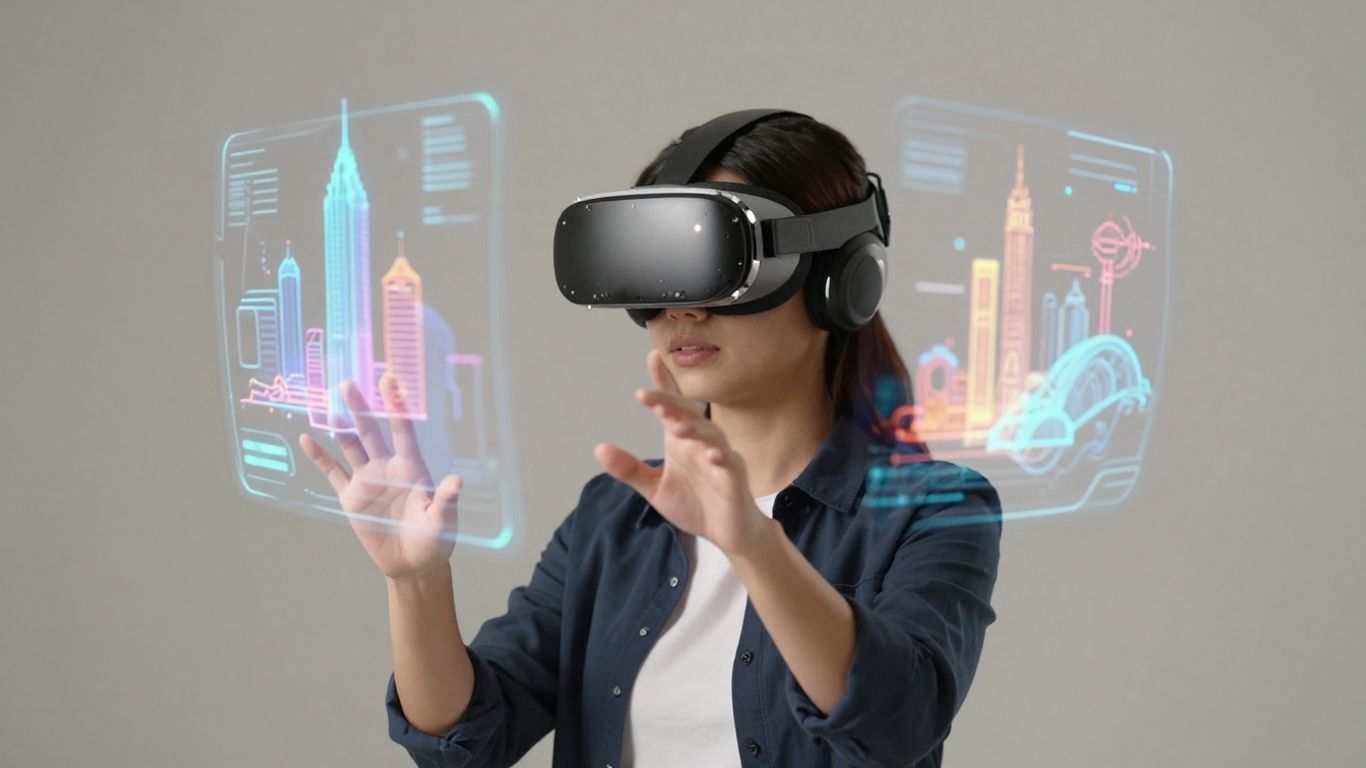
Augmented reality (AR) is moving beyond just fun filters and games. It’s becoming a real tool that changes how we learn, shop, and even do our jobs. Think of it as adding a digital layer to what you already see, making the real world more informative and interactive. This technology is quietly revolutionizing everyday tasks and industries.
Revolutionizing Education with Visualized Learning
Remember struggling to picture abstract concepts in textbooks? AR makes those days a thing of the past. Imagine a biology class where students can hold a 3D model of the human heart in their hands, rotating it and seeing how each part works. Or history lessons where ancient ruins appear right in the classroom, letting students explore them virtually. This kind of visualized learning makes complex subjects easier to grasp and way more engaging.
- Interactive Textbooks: Digital overlays bring diagrams and historical figures to life.
- Virtual Field Trips: Explore distant places or historical sites without leaving the classroom.
- Hands-on Simulations: Practice complex procedures, like dissections or chemical experiments, in a safe, digital space.
AR in education isn’t just about making learning flashy; it’s about making it more effective by catering to different learning styles and providing experiences that were previously impossible.
Transforming Retail Through Virtual Try-Ons
Shopping online can be a gamble. Will that sofa fit? Does that shirt look good on me? AR is stepping in to bridge that gap. Apps now let you place virtual furniture in your living room to see how it looks and fits. You can even try on clothes or makeup virtually. This helps shoppers make more confident decisions, reducing returns and boosting satisfaction. It’s a win-win for both customers and businesses.
Enhancing Manufacturing and Maintenance Workflows
In industries like manufacturing and maintenance, AR is proving incredibly useful. Technicians can wear AR glasses that overlay instructions and diagrams directly onto the machinery they’re working on. This means fewer errors, faster repairs, and improved safety. Training new employees also becomes more efficient, as they can practice tasks in a simulated environment with real-world context. This technology is already addressing significant challenges within these critical sectors, showing a clear return on investment by improving efficiency and problem-solving capabilities. You can find solutions for manufacturing and logistics .
Here’s a quick look at how AR impacts these fields:
- Step-by-step guidance: Digital instructions appear directly on equipment.
- Remote assistance: Experts can guide on-site workers visually, no matter the distance.
- Training simulations: Practice complex repairs or assembly processes safely.
This practical application of AR is a prime example of how technology can streamline complex operations and boost productivity in tangible ways.
Beyond Entertainment: Immersive Augmented Reality Experiences in Action
While AR often gets talked about in terms of fun filters or games, its real power lies in how it can change how we interact with the world around us, even outside of pure entertainment. Think about it – we’re moving past just playing games and into using AR for some pretty practical stuff. It’s not just about adding digital bits to your view; it’s about making those additions actually useful.
Bringing Dinosaurs to Life with Jurassic World Alive
Remember when Pokémon GO first came out and everyone was walking around looking at their phones? Jurassic World Alive takes that idea and runs with it, letting you discover and collect dinosaurs right in your own neighborhood. You can see a T-Rex standing in your backyard or a Triceratops grazing in the park. It’s a cool way to blend the prehistoric world with our modern one, making learning about these creatures feel like a real adventure. The ability to place these massive digital creatures into our everyday environments is a testament to AR’s growing capabilities. It makes the impossible feel tangible.
Exploring New Frontiers in Gaming with Pokémon GO
Okay, so Pokémon GO is entertainment, but it was also a game-changer for AR. It got millions of people outside, exploring their local areas, and interacting with digital characters overlaid onto the real world. It showed us that AR gaming wasn’t just a gimmick; it could encourage physical activity and social interaction. Players weren’t just staring at a screen; they were actively moving through their physical space to catch Pokémon. This kind of gameplay really opened people’s eyes to what AR could do.
Visualizing Home Furnishings with IKEA Place
This is where AR really starts to show its practical side. With the IKEA Place app, you can virtually place furniture from IKEA’s catalog into your own home using your phone’s camera. Wondering if that sofa will fit in your living room or how that new bookshelf will look against your wall? Now you can see it before you buy it. This takes a lot of the guesswork out of shopping for big items and helps you make better decisions. It’s a smart way to use AR to solve a common problem for shoppers.
AR is proving to be more than just a novelty. By integrating digital information and objects into our physical surroundings, it’s creating new ways to learn, play, and shop. The applications are expanding rapidly, moving from simple visual overlays to tools that genuinely assist us in our daily lives and decision-making processes.
The Evolution of Augmented Reality Experiences: From Filters to Functionality
Remember when augmented reality (AR) felt like just a fun gimmick? We’re talking about those early days of social media filters that put dog ears on your face or the novelty apps that let you place a cartoon character in your living room. It was cool, sure, but it didn’t exactly feel like the future. Those early applications were just the tip of the iceberg, hinting at a much deeper potential. Now, AR has moved way beyond simple visual overlays and is becoming a genuinely useful tool across many areas of our lives.
Understanding the Spectrum: AR, VR, and MR
It’s easy to get AR, Virtual Reality (VR), and Mixed Reality (MR) mixed up. Think of them as points on a spectrum. VR completely immerses you in a digital world, shutting out the real one. AR, on the other hand, adds digital elements to your existing environment. MR takes it a step further, allowing digital objects to interact with your physical space in a more integrated way. It’s like AR is a digital sticker on the real world, while MR is a digital object that can sit on your real table and react if you walk around it.
- Virtual Reality (VR): Fully digital, immersive environment.
- Augmented Reality (AR): Digital elements overlaid onto the real world.
- Mixed Reality (MR): Blends digital and physical worlds, with interaction between them.
The Rise of Accessible Augmented Reality Experiences
One of the biggest shifts we’ve seen is how accessible AR has become. You no longer need fancy, expensive headsets to experience it. Your smartphone is often all you need. This accessibility has opened the door for a huge range of practical applications. We’re seeing AR used in education to visualize complex subjects, in retail for virtual try-ons, and even in manufacturing to guide workers through repairs. It’s no longer just for entertainment; AR is becoming a functional part of our daily routines and professional workflows. The potential for AR is significant, and its influence is growing across various industries .
The journey from playful filters to functional tools shows a clear progression. As the technology matures, the focus shifts from novelty to genuine utility, making AR a more integrated part of how we work, learn, and interact with the world around us.
Bridging the Gap: VR Passthrough Enhancing AR
Interestingly, even VR is starting to borrow from AR. Many newer VR headsets now feature ‘passthrough’ technology. This allows you to see your real-world surroundings through the headset’s cameras, effectively turning a VR device into an AR or MR device. This blurring of lines is exciting because it means we can get the best of both worlds – deep immersion when we want it, and augmented reality capabilities when we need them, all within a single piece of hardware. This convergence is paving the way for even more sophisticated and versatile extended reality experiences in the near future.
Crafting Compelling Augmented Reality Experiences: Tools and Techniques
So, you want to build something cool with augmented reality? It’s not just about slapping a digital object onto your phone screen anymore. Making AR experiences that people actually want to use involves a mix of technical know-how and creative flair. It’s about building a bridge between the digital and the real world in a way that feels natural and engaging.
Leveraging Game Engines for Immersive Worlds
When you think about creating detailed 3D environments or interactive elements, game engines are often the go-to. Tools like Unity and Unreal Engine are powerhouses for this. They give you the building blocks to create everything from realistic virtual objects to complex animations. You can design how things look, how they move, and even how they react to the user’s actions. These engines are incredibly versatile, allowing developers to craft experiences that feel polished and alive. They handle a lot of the heavy lifting, so you can focus more on the creative side of things.
Specialized Platforms for Augmented Reality Development
Beyond the big game engines, there are platforms specifically designed for AR. Think of Apple’s ARKit and Google’s ARCore. These are Software Development Kits (SDKs) that give you the tools to work directly with device cameras and sensors to understand the physical space. They help with things like tracking surfaces, recognizing images, and placing virtual objects accurately. Then there are platforms like Vuforia or Wikitude, which offer more focused AR features, like advanced object recognition and cloud-based solutions for managing your AR content. They can simplify certain aspects of AR development, making it easier to get your project off the ground.
The Art of Storytelling in Immersive Environments
Building a great AR experience isn’t just about the tech; it’s also about the story you’re telling. How do you guide the user? What’s the purpose of the digital overlay? It’s about creating an intuitive flow and interactions that make sense. Think about how you want the user to feel and what you want them to do. A well-designed user interface and thoughtful interactions are key to keeping people engaged. It’s not enough to just show a virtual object; you need to make it part of a narrative or a useful function that draws the user in.
The most memorable AR experiences often blend the digital and physical so well that users forget they’re interacting with technology. It feels like a natural extension of their reality, providing information or entertainment in a way that’s both surprising and useful.
Here’s a quick look at some common development steps:
- Concept & Design: Define the core idea, target audience, and the user journey. Sketch out how the AR elements will interact with the real world.
- Asset Creation: Develop or source 3D models, textures, animations, and sounds. This is where your virtual elements come to life.
- Development & Integration: Use SDKs and game engines to build the AR application, integrating your assets and defining interactions.
- Testing & Iteration: Rigorously test on various devices, gather feedback, and refine the experience based on user input and performance data.
| Tool/Platform | Primary Use Case | Key Features |
|---|---|---|
| Unity | General AR/VR Development | 3D/2D Engine, Cross-Platform |
| Unreal Engine | High-Fidelity AR/VR | Advanced Graphics, Realism |
| ARKit | iOS AR Development | World Tracking, Image Recognition |
| ARCore | Android AR Development | Plane Detection, Environmental Understanding |
| Vuforia | Marker-Based AR | Image Targets, Object Recognition |
Future Horizons: Innovations in Augmented Reality Experiences
The Convergence of AI and Augmented Reality
Artificial intelligence is really starting to make AR feel less like a novelty and more like a tool. Think about how AI can help AR understand what it’s seeing in the real world. This means AR apps could get much smarter about how they interact with us and our surroundings. For example, imagine an AR app that can identify a plant in your garden and then instantly pull up care instructions, or a shopping app that recognizes an item of clothing and shows you similar styles available online. The real magic happens when AI can predict what you might need or want next, making AR experiences feel truly personal and helpful. This isn’t just about overlaying graphics; it’s about creating intelligent digital assistants that live in our physical space.
Advancements in Hardware for Seamless Integration
Right now, some AR hardware can still feel a bit clunky. But that’s changing. We’re seeing lighter, more comfortable glasses that look more like regular eyewear. The goal is to make AR so unobtrusive that you can wear it all day without it feeling like a burden. Battery life is also a big hurdle, and companies are working hard to make devices last longer. Imagine AR glasses that can keep up with your entire workday or a long evening out.
Here’s a quick look at what’s improving:
- Display Technology: Brighter, clearer displays that are easier to see in different lighting conditions.
- Field of View: Wider viewing angles so digital elements don’t feel like they’re confined to a small screen.
- Processing Power: More powerful chips packed into smaller devices for smoother, more complex AR applications.
- Connectivity: Faster and more reliable connections to the internet and other devices.
The Promise of Blended Reality Experiences
This is where things get really interesting. Blended reality, or mixed reality (MR), takes AR and VR and mixes them together. Instead of just overlaying digital objects onto the real world (AR) or being completely in a virtual world (VR), MR allows digital objects to interact with your physical environment in a more sophisticated way. Think about a virtual meeting where digital avatars of your colleagues can sit around your actual desk, or a training simulation where virtual tools appear on real machinery.
The lines between the digital and physical are becoming less defined. This isn’t about replacing reality, but about adding new layers of information and interaction that can make our lives easier, more productive, and more fun. It’s about creating a world where digital content is a natural extension of our physical surroundings.
This kind of blended experience could change how we collaborate, learn, and even play. It’s a step towards a future where technology is less of a separate thing we use and more of an integrated part of our everyday lives.
Addressing Challenges in Augmented Reality Experiences
While the buzz around augmented reality is exciting, and the potential is huge, we’re not quite at the point where AR is as common as your smartphone. There are definitely some bumps in the road that developers and users are bumping into. Getting AR to work smoothly for everyone, everywhere, takes more than just cool ideas.
Improving Accessibility and Affordability
One of the biggest hurdles is making AR available to more people. Right now, the really high-end AR experiences often need fancy, expensive hardware. Think about those sleek AR glasses that are still mostly in the hands of early adopters or big companies. For most of us, our phones are the main gateway to AR, which is great, but it means we’re limited by what our phones can do. Battery life can drain fast when you’re running an AR app, and not all phones have the processing power to handle complex digital overlays without stuttering. We need more affordable devices that can deliver a good experience without breaking the bank.
- Cost of Hardware: High-end AR headsets are still a significant investment.
- Device Capabilities: Older or lower-spec smartphones may struggle with demanding AR applications.
- Network Dependency: Reliable, high-speed internet is often needed for streaming complex AR content, which isn’t universally available.
Streamlining Content Creation Processes
Creating compelling AR content isn’t as simple as snapping a photo. It takes specialized skills and tools. Imagine trying to build a realistic 3D model of a piece of furniture or animate a historical figure to appear in your living room. This requires 3D artists, developers, and designers who know how to work with AR platforms. This can be a slow and costly process, especially for smaller businesses or independent creators who want to jump on the AR bandwagon. We need simpler, more intuitive tools that allow a wider range of people to build and share AR experiences without needing a whole team of experts.
The path from a simple idea to a polished AR experience involves many steps, from 3D modeling and animation to coding and testing. Making these steps easier and faster is key to getting more AR content out into the world.
Optimizing User Experience and Interaction
Even when you have the hardware and the content, making AR feel natural and intuitive is another challenge. How do users interact with virtual objects in their real space? Is it through taps on a screen, voice commands, or hand gestures? Getting these interactions right is tricky. We’ve all experienced apps that are confusing to use or don’t respond the way we expect. For AR to become truly mainstream, the user experience needs to be smooth, predictable, and, frankly, enjoyable. This includes making sure AR doesn’t cause motion sickness or eye strain, and that it integrates into our daily lives without feeling like a chore.
- Intuitive Controls: Developing interaction methods that feel natural and easy to learn.
- Performance Optimization: Ensuring AR applications run smoothly without lag or glitches.
- Comfort and Safety: Addressing potential issues like eye strain or motion sickness for prolonged use.
The Road Ahead
So, what does all this mean for us? It’s pretty clear that augmented and virtual reality aren’t just cool tech toys anymore. They’re starting to show up in real ways, changing how we learn, shop, and even how we hang out. While there are still some hurdles to jump, like making the gear cheaper and easier to use, the progress is undeniable. We’re seeing more and more apps and experiences that blend the digital and physical worlds, and honestly, it’s kind of exciting to think about what comes next. It feels like we’re just scratching the surface of what’s possible, and the future looks pretty interesting.
Frequently Asked Questions
What exactly is Augmented Reality (AR)?
Think of Augmented Reality, or AR, as adding a digital layer on top of what you already see in the real world. It’s like using your phone to put a virtual sticker on your friend’s face or seeing how a new couch would look in your living room before you buy it. It doesn’t replace your world; it just adds to it.
How is AR different from VR (Virtual Reality)?
Virtual Reality, or VR, completely takes you to a different, digital world. You wear a headset and can’t see your real surroundings. AR, on the other hand, keeps you in the real world but adds digital things to it. So, VR is like stepping into a new place, while AR is like seeing digital characters or information appear in your own room.
Are AR experiences only for games and fun?
Not at all! While games like Pokémon GO are super popular, AR is used for much more. Imagine learning about planets by seeing them float in your classroom or a mechanic seeing repair instructions appear right on a machine. It’s becoming a powerful tool for learning, shopping, and even working.
Do I need special equipment to use AR?
That’s the great thing about AR – often, you don’t! Many AR experiences work right on your smartphone or tablet. While some advanced AR glasses are coming out, most of the cool stuff you see today can be accessed with devices you probably already own.
What are some cool examples of AR being used today?
Besides games, think about apps that let you virtually try on makeup or see how furniture looks in your home (like IKEA Place). In education, AR can bring history lessons or science diagrams to life. Even in stores, you might see AR helping you find products or learn more about them.
What’s next for AR technology?
AR is getting smarter and more connected. We’ll likely see it blend even more with Artificial Intelligence, making experiences more personalized. Hardware will get better too, making AR feel more natural and easy to use. The goal is to make the digital and physical worlds work together even more smoothly.