
Transforming Consumer Engagement: The Future of Advertising Augmented Reality
- Date
It feels like just yesterday we were all staring at static billboards and flat banner ads. Now, things are changing fast. Augmented reality, or AR, is stepping in to make advertising way more interesting. Instead of just looking at ads, we can actually interact with them, see products in our own space before buying, and generally get a lot more out of what brands are showing us. This shift is changing how companies connect with us, making advertising augmented reality a big deal.
Key Takeaways
- Advertising augmented reality turns passive viewers into active participants, making ads more engaging.
- AR helps consumers make quicker buying choices by letting them virtually try products or see them in their homes.
- New AR tools and platforms, along with AI, are making advertising augmented reality more personalized and effective.
- Smartphones are the main way most people experience advertising augmented reality, making it widely accessible.
- The future of advertising augmented reality includes even more personalized ads and AR acting as a bridge to the metaverse.
The Power of Interactive Advertising Augmented Reality
Transforming Passive Views into Active Participation
Remember when ads were just things you looked at? Like a poster on a wall or a static image in a magazine. Well, those days are fading fast. Augmented Reality (AR) is changing all that, turning ads from something you just see into something you actually do . It’s like going from watching a movie to being in the movie. Instead of just passively scrolling past, AR ads invite you to step in, play around, and become part of the brand’s story. This shift from just viewing to active participation is a game-changer for how brands connect with people.
Capturing and Retaining Consumer Attention
Let’s be honest, our attention spans aren’t what they used to be. Ads have to fight harder than ever to get noticed. AR ads are really good at this. They grab your attention because they’re different and unexpected. Think about seeing a virtual dinosaur walk down your street through your phone, or trying on a new pair of sneakers without leaving your couch. These kinds of experiences are way more interesting than a standard banner ad. People spend more time with AR ads, and they remember them better too. It’s not just about seeing the ad; it’s about the experience the ad provides.
- AR ads can hold attention up to 75 seconds, compared to the average 1.3 seconds for traditional digital ads.
- Consumers are 70% more likely to share AR content on social media.
- AR campaigns often see a 45% higher conversion rate than static ads.
Driving Deeper Brand Connections Through Experience
When you can actually interact with a product or brand in a meaningful way, even virtually, it creates a stronger bond. AR lets you do just that. You can see how a piece of furniture would look in your living room before you buy it, or test out makeup shades without going to a store. This kind of hands-on (even if virtual) experience builds trust and makes the brand feel more real. It moves beyond just selling a product to creating a memorable moment. This deeper connection is what brands are really after, and AR is proving to be a powerful tool for achieving it.
The real magic of AR in advertising is its ability to make the abstract tangible. It bridges the gap between digital information and our physical world, allowing for a level of interaction that was previously impossible. This creates a more personal and impactful brand encounter.
Augmented Reality’s Impact on Consumer Behavior
Augmented reality (AR) is really changing how people think about and interact with ads. It’s not just about seeing something anymore; it’s about actually doing something with it. This shift is pretty significant for how brands connect with us.
Accelerating Purchase Decisions with Virtual Trials
One of the biggest hurdles in online shopping has always been not being able to touch or try a product before buying. AR tackles this head-on. Imagine wanting to buy a new couch. Instead of just looking at pictures, you can use an AR app to see exactly how that couch would look in your living room, right on your phone. This virtual try-on capability makes a huge difference. It helps people feel more confident about their choices. Studies show that around 61% of shoppers are more likely to buy something after they’ve tried it out using AR. This isn’t just a small boost; it can really speed up the whole decision-making process because the uncertainty is gone. It’s like having a personal showroom in your pocket.
Building Trust Through Immersive Product Visualization
Trust is a big deal when it comes to buying things, especially online. AR helps build that trust by showing products in a way that feels more real and honest. When you can see a product from every angle, in your own space, and understand its size and how it fits, it feels more tangible. This kind of visualization goes beyond just looking at a flat image. It allows consumers to get a much clearer picture of what they’re actually getting. This transparency can lead to fewer surprises and a stronger sense of reliability with the brand. It’s a way for brands to be upfront and show off their products in a way that feels genuine.
Increasing Conversion Rates with Interactive Ads
So, what does all this mean for brands? Well, it means more sales. When people can interact with a product before buying, they are more likely to complete the purchase. AR ads are not just catching attention; they are actively encouraging action. Think about it: if you can virtually try on clothes, see how furniture fits your room, or even test out a new gadget in AR, you’re much more likely to click that ‘buy’ button. This leads to higher conversion rates, which is what every marketer wants. It’s a win-win: consumers get a better shopping experience, and brands see better results from their advertising efforts. The data backs this up, with AR campaigns often showing significantly better performance than traditional ads. For instance, AR ads can capture attention for much longer periods, giving brands more time to make their case. This study even looked into how AR affects buying behavior.
Here’s a quick look at some key benefits:
- Higher Engagement: People spend more time interacting with AR ads.
- Increased Confidence: Virtual trials reduce buyer hesitation.
- Better Understanding: Immersive visualization clarifies product details.
- More Sales: Higher conversion rates are a direct result.
AR is transforming advertising from a one-way broadcast into a two-way conversation. It allows consumers to actively participate, explore, and make informed decisions, which is a massive change from just passively viewing ads.
Innovations in Advertising Augmented Reality
Advertising is changing, and augmented reality is leading the charge with some really cool new ideas. Gone are the days of just looking at a static picture or a boring video. Now, brands are finding ways to make ads feel like an experience, and it’s working.
Personalized Content and Dynamic Ad Formats
One of the biggest shifts is how ads can be tailored just for you. Instead of a one-size-fits-all approach, AR can change what you see based on what you like or what you’ve done before. Imagine an ad for a new car that shows up in your driveway, in the exact color you prefer, or a furniture ad that lets you see how a couch would look in your living room, perfectly sized. This isn’t just about showing a product; it’s about showing your product, in your space. These dynamic formats mean ads are more relevant and grab your attention because they feel like they were made just for you.
The Rise of AR-Supported Platforms and Partnerships
We’re also seeing more companies team up to make AR advertising happen. It’s not just one brand doing it alone anymore. Think about social media apps adding AR filters that let you try on clothes or test makeup. These platforms are becoming hubs for AR experiences. Brands are partnering with AR software developers and even data companies to create these unique ads. This collaboration means we get more polished, interactive ads that are easier for brands to create and for consumers to enjoy.
Redefining Influencer Marketing with Virtual Experiences
Influencer marketing is getting a serious upgrade thanks to AR. Instead of just showing a product, influencers can now host virtual events or create interactive experiences for their followers. Imagine a fashion influencer doing a virtual runway show where you can see the clothes on a virtual model in 3D, or a gamer showing off a new game by letting you try a mini-version of it in your own room. This makes the connection between the influencer, the brand, and the audience much stronger and more memorable. It’s a way to build trust and excitement that goes way beyond a simple sponsored post.
AR is moving advertising from something you passively see to something you actively participate in. This shift is making ads more engaging and effective than ever before.
The Technological Foundation for Advertising Augmented Reality
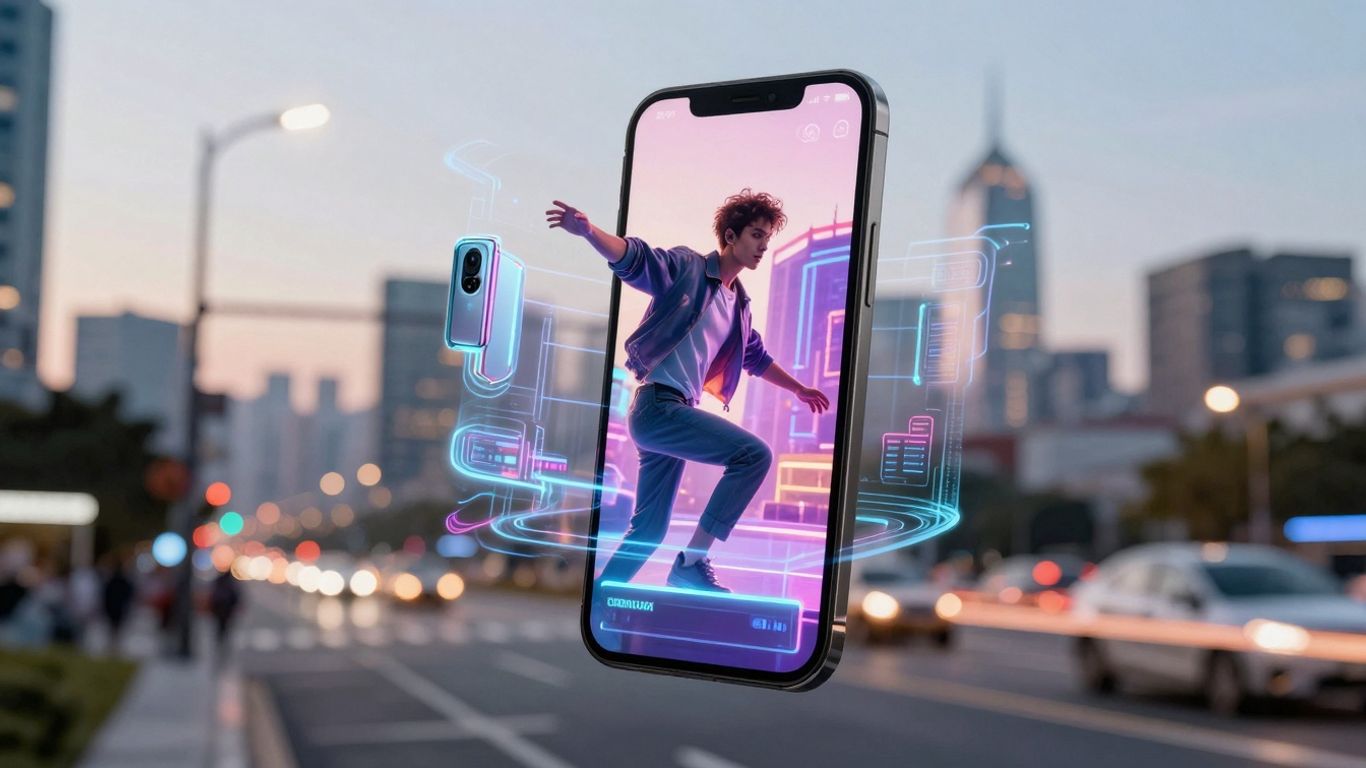
Ubiquitous Smartphone Penetration as an AR Enabler
It’s pretty wild to think about, but most of us have a supercomputer in our pockets. The sheer number of smartphones out there is staggering. We’re talking billions of devices worldwide, and a huge chunk of them are ready to handle augmented reality experiences right now. This isn’t some niche tech for early adopters anymore; it’s mainstream. When you can reach so many people instantly with just their phone, it changes the game for advertisers. No need for special headsets or complicated setups – just point and play.
Advancements in AR Software Development Kits
Making AR work smoothly isn’t magic; it’s built on some pretty clever software. Developers have tools, called SDKs, that make it way easier to create these AR experiences. Think of them like toolkits for building digital things that interact with the real world. These SDKs are getting better all the time, allowing for more realistic graphics, smoother tracking of objects, and more complex interactions. This means brands can create cooler, more engaging AR ads without needing a massive team of tech wizards.
The Role of 5G and AI in Enhancing AR Ads
Now, let’s talk about what’s really making AR ads shine. Two big players are 5G and AI. 5G networks are super fast and can handle a lot of data, which is perfect for AR. It means those fancy 3D models and animations can load instantly and play without any annoying lag. It makes the whole experience feel much more real. Then there’s AI. AI can help personalize AR ads. Imagine an ad that changes based on what you like or where you are. AI can figure that out and make the AR experience just for you. It’s like having a personal shopper, but in AR.
Here’s a quick look at how these technologies are changing things:
- Faster Loading Times: 5G means less waiting and more experiencing.
- Smoother Interactions: Complex AR visuals run without a hitch.
- Personalized Content: AI tailors AR ads to individual users.
- More Realistic Graphics: Advanced SDKs and processing power create lifelike digital overlays.
The combination of widespread smartphone access, sophisticated development tools, and next-generation network and intelligence technologies is creating the perfect storm for AR advertising to truly take off. It’s no longer a question of if it’s possible, but how effectively brands can implement it.
Augmented Reality in Physical and Digital Retail
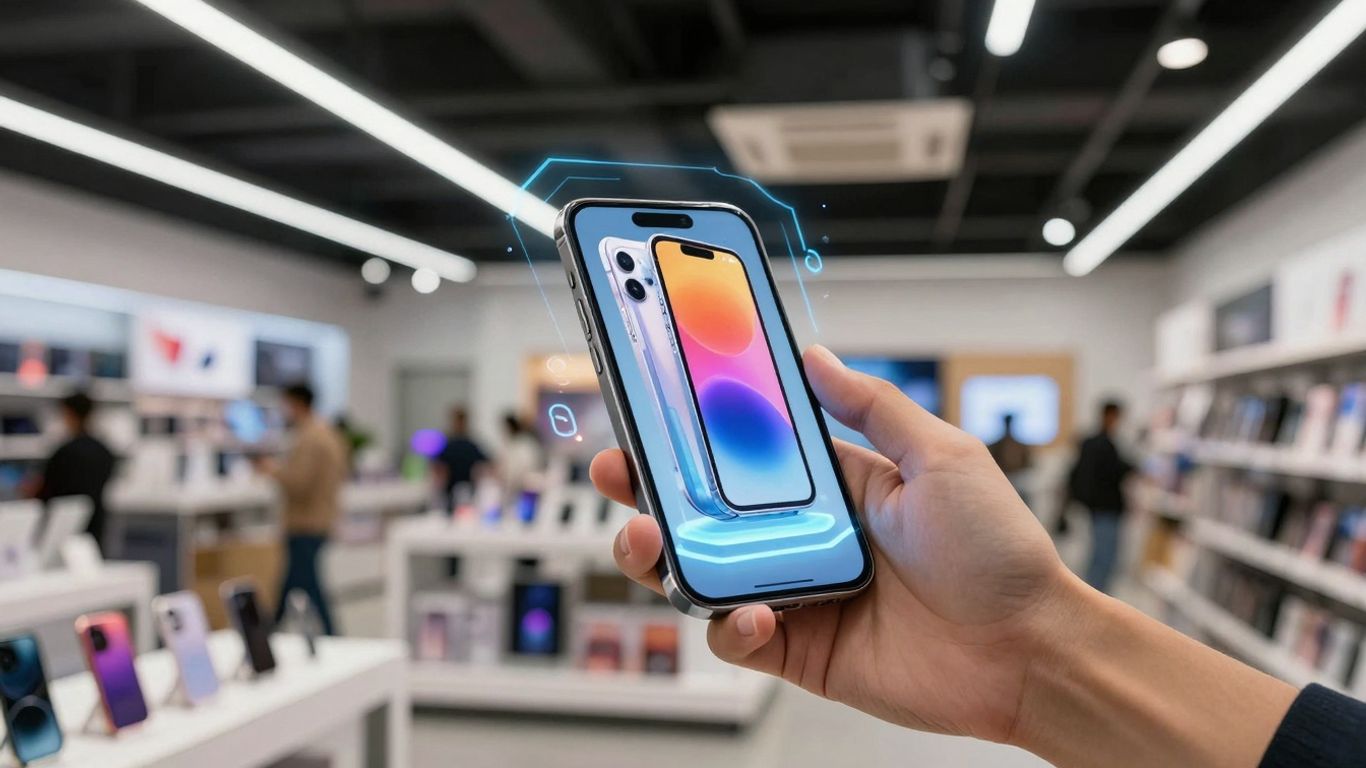
Augmented reality is really changing how we shop, both online and when we actually go to a store. It’s like having a digital layer over the real world that makes shopping way more interesting and helpful. Think about it: you can see how that couch would actually look in your living room before you buy it, or try on sunglasses without ever putting them on. This makes online shopping feel more real and takes away a lot of the guesswork.
Enhancing E-commerce with Virtual Try-Ons
Online shopping is super convenient, but it’s hard to know if something will fit or look right. AR solves this. Brands are letting us virtually try on clothes, makeup, glasses, and even see how furniture fits in our homes. This isn’t just a cool gimmick; it actually helps us make better decisions. When you can see a product in your own space or on yourself, you feel more confident about buying it. This means fewer returns for businesses and happier customers who know what they’re getting.
- Virtual Try-On: See how clothes, makeup, or accessories look on you.
- Home Visualization: Place furniture or decor in your room to check size and style.
- Product Configuration: Explore different colors and options for items like cars or electronics.
This ability to visualize products in a personal context drastically cuts down on buyer’s remorse and boosts confidence, leading to more sales and less hassle with returns.
Transforming In-Store Shopping Experiences
AR isn’t just for online shopping; it’s making physical stores more engaging too. Imagine walking into a store and pointing your phone at a product. Suddenly, you get extra info, see reviews, or even watch a demo video right there. Some stores are using AR to help you find products, like a digital map guiding you through the aisles. It’s a way to blend the best of digital information with the physical experience of shopping, making it more efficient and fun. Think of interactive displays or fitting rooms that let you see how different outfits look without actually changing.
AR-Powered Product Exploration and Information
Beyond just trying things on, AR can give us a ton of information about products. Point your phone at a food item, and you might see nutritional facts or recipe ideas pop up. Look at a piece of electronics, and you could get a quick tutorial on how to use it. This makes shopping more educational and helps us discover new things. It turns passive browsing into an active exploration, where the product itself becomes a gateway to more knowledge and interaction. It’s a smart way for brands to connect with consumers by providing useful details right when and where they need them.
| Feature | Benefit for Consumer |
|---|---|
| Virtual Try-On | Increased confidence in fit and style |
| In-Home Visualization | Better understanding of size and aesthetic |
| Interactive Information | Quick access to reviews, demos, and specs |
| In-Store Navigation | Faster and easier product discovery |
| Gamified Experiences | More engaging and memorable shopping trips |
AR is really making shopping more personal and practical, whether you’re at home on your couch or walking through a mall. It’s a win-win, giving us more control and information while helping brands connect better with us. It’s pretty neat, honestly. The experience is what matters, and AR delivers that in spades. It’s not just about seeing; it’s about interacting and understanding. This is definitely the direction things are heading.
The Future Landscape of Advertising Augmented Reality
So, what’s next for AR in advertising? It’s not just about cool filters anymore. We’re looking at a future where ads are so personalized, they feel like they were made just for you, right when you need them. Think about walking down the street and seeing a digital overlay on a store window showing you a special offer just for you, based on what you’ve liked online. That’s the kind of contextual advertising we’re talking about.
Contextual and Hyper-Personalized Advertising
This is where AR really shines. Instead of a one-size-fits-all ad, imagine pointing your phone at a product and seeing not just information, but also reviews from people who look like you, or seeing how it fits into your specific living space. It’s about making ads relevant to your immediate surroundings and your personal history. This level of personalization means brands can connect with consumers on a much deeper level, moving beyond just selling a product to offering a tailored solution.
AR as the Gateway to the Metaverse
Many folks are talking about the metaverse, and AR is shaping up to be a big part of how we get there. It’s the bridge that connects our physical world with these new digital spaces. Imagine trying on virtual clothes in a store that then appear in your metaverse avatar’s wardrobe, or attending a virtual concert and seeing AR elements that are only visible through your phone or smart glasses. This integration means advertising won’t be confined to screens; it will be woven into the fabric of our digital and physical lives. The immersive technology in advertising market is growing fast, and AR is leading the charge [d2d1].
AI-Driven Customization of AR Experiences
Putting it all together, artificial intelligence is the engine that will drive this hyper-personalization. AI can analyze vast amounts of data to understand what you like, what you need, and when you need it. This allows AR experiences to be customized on the fly. So, an AR ad for a new coffee shop might show you a special discount if it detects you’re nearby and it’s your usual coffee time, or it might highlight a new pastry based on your past orders. It’s about making every interaction feel unique and genuinely helpful, transforming passive viewing into active, personalized engagement.
Here’s a look at how engagement is changing:
- Attention Spans: AR ads capture significantly more attention than traditional formats.
- Recall Rates: Consumers remember AR campaigns better, leading to stronger brand recognition.
- Sharing: Interactive AR content is more likely to be shared on social media, increasing organic reach.
The future of advertising isn’t just about being seen; it’s about being experienced. AR is making this possible by blending the digital and physical worlds in ways that are both engaging and informative. It’s a shift from broadcasting messages to creating conversations, where consumers are active participants in the brand’s story.
The Way Forward
So, it’s pretty clear that augmented reality isn’t just some passing fad in advertising. It’s really changing how brands talk to us, and honestly, how we check out products. We’re seeing ads that let us try things on or see how furniture looks in our own homes, which is way more interesting than just looking at a picture. Plus, with phones getting smarter and faster, AR ads are becoming easier for everyone to use. Brands that jump on this now are going to have a real edge, making ads that people actually want to interact with, not just ignore. It feels like we’re just scratching the surface of what’s possible, and it’s going to be exciting to see where this all goes next.
Frequently Asked Questions
What exactly is augmented reality (AR) and how is it used in ads?
Augmented reality, or AR, is like adding a digital layer to the real world you see through your phone or tablet. Think of it as a cool filter that makes things appear in your surroundings that aren’t really there. In ads, AR lets you play with products, see how furniture looks in your room, or even try on virtual clothes before you buy them. It turns boring ads into fun experiences you can interact with.
Why are AR ads better than regular ads?
AR ads are way more engaging because you can actually do things with them, not just look. People spend more time looking at AR ads, and they remember them better. Plus, they’re more likely to share cool AR experiences with friends, which helps brands get noticed more without paying extra.
Can AR ads help me decide if I want to buy something?
Definitely! AR lets you ‘try before you buy’ virtually. You can see how a new couch would fit in your living room or try on different makeup shades. This helps you feel more confident about your choice, making it easier and faster to decide to purchase.
Are AR ads becoming more common?
Yes, they’re popping up everywhere! Most new phones can handle AR, and apps like Instagram and TikTok have AR features built-in. Companies are using AR for everything from virtual try-ons in online stores to making billboards more exciting in the real world.
Will AR ads get even cooler in the future?
Absolutely! Imagine ads that know exactly what you like and show you personalized offers as you walk around. AR is also seen as a way to enter the ‘metaverse,’ a digital world where you can interact with brands in new ways. Plus, smart computers (AI) will make AR ads even more customized to you.
Do I need a special device to see AR ads?
Nope! Most of the time, all you need is your smartphone or tablet. Many AR ads can be accessed right through your phone’s camera or a web browser, so you don’t even need to download a separate app. It’s designed to be super easy for everyone to use.